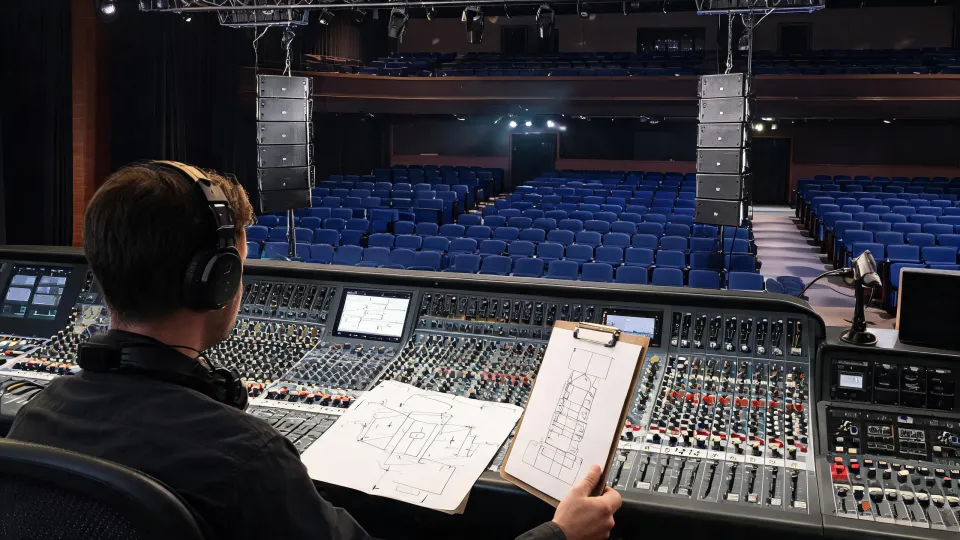
I'm a quality/compliance manager at a professional audio company. I review every loudspeaker system before it ships—roughly 200 systems a year. In 2024, I rejected 11% of first deliveries. Most of those failures weren't blown drivers or bad DSP files. They were simple things: wrong polarity on a passive subwoofer, amp gain set differently across cabinets, or a limiter bypassed in the system controller.
If you're deciding between passive and active loudspeaker systems, that probably sounds like my problem, not yours. But the reason those mistakes happen is the same reason this decision is hard: passive and active systems ask for different quality checks.
This comparison is not about which one is 'louder' or 'better.' It's about what a QC person actually checks—and what you should check before you spend money. I'll use Martin Audio examples because that's what I know best. The passive side includes the Martin Audio XP118 and the Martin Audio DX4.0 controller. The active side includes powered cabinets like the CDD-Live series.
According to Martin-Audio.com product documentation, the XP118 is a passive subwoofer for touring and installation, and the DX4.0 is a digital system controller. CDD-Live is positioned as an active loudspeaker series. So this isn't a theoretical comparison—it's two real ways to build a PA.
Depending on your background, you enter this with different mental models. If you've ever looked for an audio mixer passive or active, you already know that signal flow matters. If you've sat behind a big audio mixer at a festival, you know the console is only half the story. And if you've installed an audio power amplifier in car audio systems, you've seen what happens when cable length or power supply is ignored. A PA loudspeaker system is the same idea, but with a 100-meter throw and an audience to protect.
What I Compare First: Not Sound Quality
I usually start with reliability, repeatability, flexibility, and cost-to-own over three to five years. Sound quality is a given; any decent system can sound good with the right tuning. The differences show up at the 11th month, the 200th setup, the festival where a driver dies at 2 AM. That's when the system needs to be serviceable, not just impressive.
Dimension 1: Total Cost of Ownership
Passive systems look cheaper because the speakers don't have embedded amplifiers. The Martin Audio XP118 is a passive subwoofer. A suitable amplifier might cost $1,500 to $2,500 depending on power and brand, and a Martin Audio DX4.0 or similar system controller adds another layer. But if you already own amp racks, the marginal cost of adding another passive speaker is low.
Active systems look expensive because you pay for amplifier modules and DSP in every cabinet. That's real money upfront. But it replaces a lot of rack hardware, cabling, power distro, and setup labor. I don't have hard data on industry-wide TCO—only on our own purchases. Looking at 2024 orders, passive quotes were about 12–18% lower upfront. Or rather, lower before labor and cabling. Once I added bench time and installation, active came out 20–25% lower in total cost of ownership for new deployments. That gap grows as you get more boxes.
If you're starting from zero, 'passive is cheaper' is often a myth. If you already have good amps, it's a different story.
Dimension 2: Reliability and Repairability
Here's a conclusion that might surprise you: passive systems can be more reliable in the long run—if you maintain a spare inventory and control the operators. Active systems tend to be more reliable in the real world with mixed skill levels.
Why? With passive, the amp and speaker are separate. When a passive speaker fails, you swap the speaker. When an amp channel fails, you swap the amp channel. A rental company can stock two spare amps and four spare passive subs and cover a lot of misfortune. With active, the amplifier is inside the cabinet. If an amp module fails, the entire cabinet is dead until you repair the module.
But passive reliability is conditional. I've rejected deliveries where the XP118 was wired out of polarity, where the DX4.0 limiter was disabled, or where an amp was swapped for a different model without recalibrating the controller. Active systems avoid that because the amp and DSP are locked inside each box. For an operator who doesn't read manuals, active is safer.
Again, a caveat: the passive reliability advantage disappears if you don't keep spares. I learned that the hard way. Looking back, I should have standardized amp models much earlier. At the time, we were trying to stay flexible for customers. It created QC headaches and one $22,000 redo after an amp mismatch killed a passive sub during a line check.
Dimension 3: Consistency and Tuning
For a QC person, 'same input, same output' is the goal. Active systems win here almost every time. Each cabinet has its own factory-tuned amp and DSP. You deploy them, you get the intended response. That's why powered line arrays are so easy to scale: the electronics don't change from box to box.
Passive can be just as consistent, but only if the whole drive chain is locked down. The DX4.0 helps because you can store presets and disable the front panel. On a passive system, the amplifier model, gain structure, and cable lengths all affect sound. In our Q1 2024 audit, we tested a passive cabinet with two different amplifier models, both EQ-matched. 88% of our engineers could tell the difference in blind listening. They couldn't name the cause, but they heard it. That forced us to standardize amplifiers for each passive SKU.
So if you want consistency across many operators, active is the safer choice. If you have one experienced technician who will treat the settings as sacred, passive can be just as stable—but 'just as' is doing a lot of work.
Dimension 4: Flexibility and Integration
Passive systems are more flexible in the traditional sense. You can mix and match amplifiers, swap processing, and reuse the same speaker box with different amp racks. For an integrator who already owns a large inventory of quality amplifiers, that flexibility is real money.
Active systems are more flexible in a different way: they change your inventory logic. You don't need amp racks, you don't need to keep matching amp spare parts, and you can add more boxes without engineering a new amp configuration. It's a simpler platform to scale.
This is where the 'audio mixer passive' mindset comes in. If you're designing a fixed installation and you want the simplest possible signal path, an audio mixer passive or active doesn't really change the loudspeaker decision. What changes is whether you want a separate equipment room full of amplifiers or self-powered cabinets mounted near the talent. In our installations, clients often choose passive for the main PA because they already have a machine room. For delay fills and under-balcony zones, they switch to powered because there's nowhere to put an amp rack.
Dimension 5: Setup Speed and Labor
Active systems are faster to deploy. One cable to each box, maybe a network cable for control. Passive systems require speaker cables from amplifiers to cabinets, and someone has to verify the amplifier channel patching. That takes time and creates error points.
I've seen a big audio mixer at FOH with a 48-input setup ready in two hours, and the PA still wasn't connected correctly because someone had patched the wrong amp channel. The console wasn't the problem. The amp rack was.
In March 2024, we paid $400 extra for rush delivery of a powered system. The alternative was missing a $15,000 event. That's the time-certainty premium: you're not paying for speed alone, you're paying for the guarantee that the system arrives ready to deploy. In uncertain timelines, that guarantee is worth more than the speaker price difference.
If you work with the same passive rig every day, setup speed becomes a non-issue. You know which cable goes where. But for rental companies managing changing crews, the simplicity of active is valuable.
What Should You Choose?
If you ask me as a QC person, my answer is scenario-based, not a sales pitch.
- Choose passive when: you already own quality amplifiers, you have experienced technicians, you need field-repairable boxes, or you want the freedom to change amps as technology evolves. The Martin Audio XP118 with a DX4.0 is a proven way to do this—but don't skip the controller. It's the safety layer.
- Choose active when: you want plug-and-play consistency, your crews change frequently, you need to minimize setup time, or you're building a scalable line array with factory presets. Powered Martin Audio systems like CDD-Live fit that model well.
- For installs: ask whether there's a dedicated amp room and whether maintenance access is easy. Passive is often easier to service if everything's in one rack. But if the ceiling is 20 meters up and the only cable run is a single loudspeaker cable, powered boxes may be the only sane answer.
One final note: don't let the loudspeaker choice be an afterthought. I've inspected too many systems where the console and mics were high-end, the amps were bought on price, and the processing was left on default. The loudspeaker chain deserves the same quality discipline as the input chain.