Venue mapping
Audience planes, balconies, trim limits, sightlines, and reflections are reviewed so the loudspeaker layout answers the actual room rather than a generic product assumption.
Every professional sound project carries pressure before the first loudspeaker is even powered. Drawings change, seating plans move, budgets tighten, and the final system still needs to cover the audience evenly. Martin Audio service support is written for that reality, helping production managers, consultants, venue operators, and integrators turn a loudspeaker list into a working deployment plan.
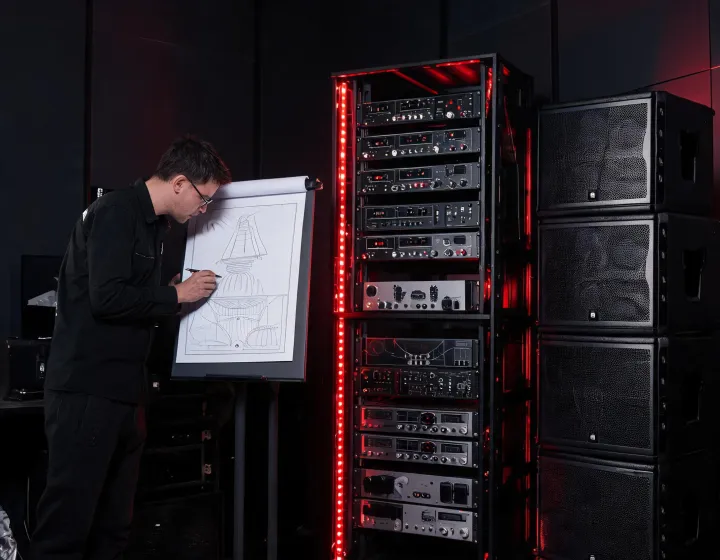
The work begins with the room, not with a catalogue page. We align sound pressure targets, coverage drawings, mounting conditions, amplifier channel planning, and commissioning tasks before a crew is asked to solve problems on site.
Audience planes, balconies, trim limits, sightlines, and reflections are reviewed so the loudspeaker layout answers the actual room rather than a generic product assumption.
Line arrays, point source cabinets, subwoofers, monitors, and amplification are matched to application demands, SPL headroom, rigging access, and maintenance expectations. Matching weighs concrete figures: array hangs of 8 to 16 boxes, point-source coverage near 90 by 60 degrees, 15 to 21-inch subwoofers, and amplifier channel counts sized for a coverage target inside about plus or minus 3 dB rather than a single peak number.
Touring packages need truck pack logic, repeatable cabling, and fast hang checks, while permanent venues need documentation that local staff can operate without guesswork.
Tuning windows, listening references, preset notes, and operator guidance keep the system useful after the specialist team leaves the room.
Service planning is also honest about scope. A coverage plan cannot make a poorly proportioned or hard-surfaced room behave like a tuned hall, continuous output is limited by power compression and thermal headroom rather than the catalogue peak, and structural load points and service access can rule out an otherwise ideal flown position. We name these boundaries early so a brief stays realistic.
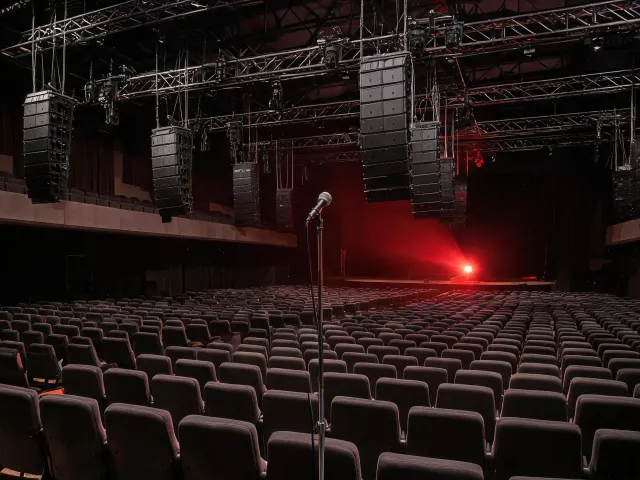
A theatre or worship room often fails in the quiet seats long before it fails at the mix position. Service planning checks direct sound, balcony underfill, stage lip coverage, and speech intelligibility together. The goal is a room where a visiting engineer can mix confidently and a local operator can repeat the result during ordinary weekly use.
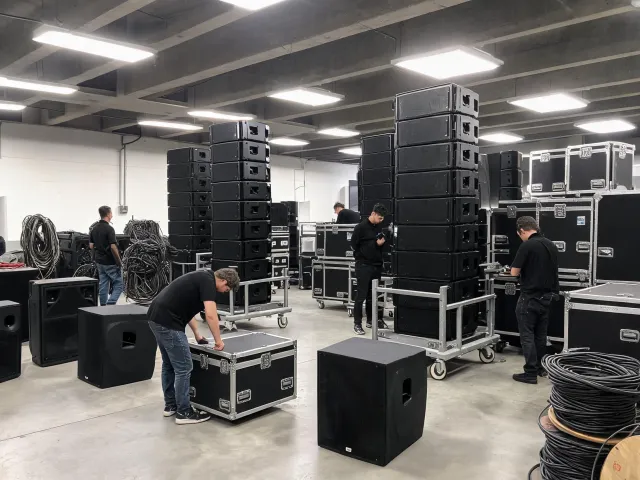
For production suppliers, the service question is not only how the system sounds on one show. It is how predictably the same package rigs, verifies, and scales under time pressure. A practical design includes array logic, subwoofer options, amplifier allocation, spare strategy, and a setup sequence that reduces avoidable onsite decisions.
Send venue drawings, audience count, rigging limits, mix position, target program material, and any installed infrastructure that must remain. We will help frame the next decision clearly.