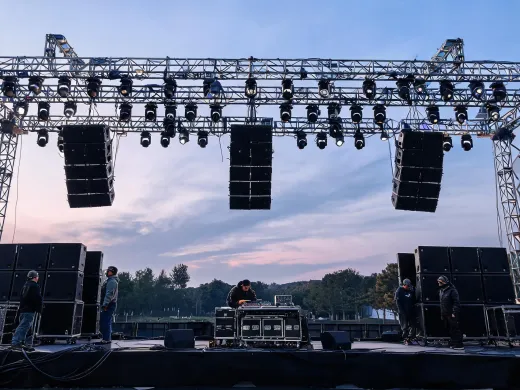
Professional audio in a large performance venue
Industries and applications

Martin Audio coverage plans for demanding professional rooms

Different venues ask different things from the same loudspeaker categories. A touring rig values speed and scalable throw, while a conference room values speech intelligibility, clean sightlines, and easy operation. The application lens keeps those differences visible.

Before a system is specified, the room should be described in operational language: who mixes it, how often the layout changes, where the audience gathers, how loud the program must be, and which spaces must stay comfortable during long events. Those questions keep Martin Audio recommendations tied to daily use rather than a generic product comparison.

Six venue types

Six venue types where the system brief changes

Each application below uses loudspeakers, subwoofers, processing, and amplification differently. The right answer is shaped by coverage geometry, acoustic treatment, operator skill, and how quickly the system must move from setup to a reliable show state.

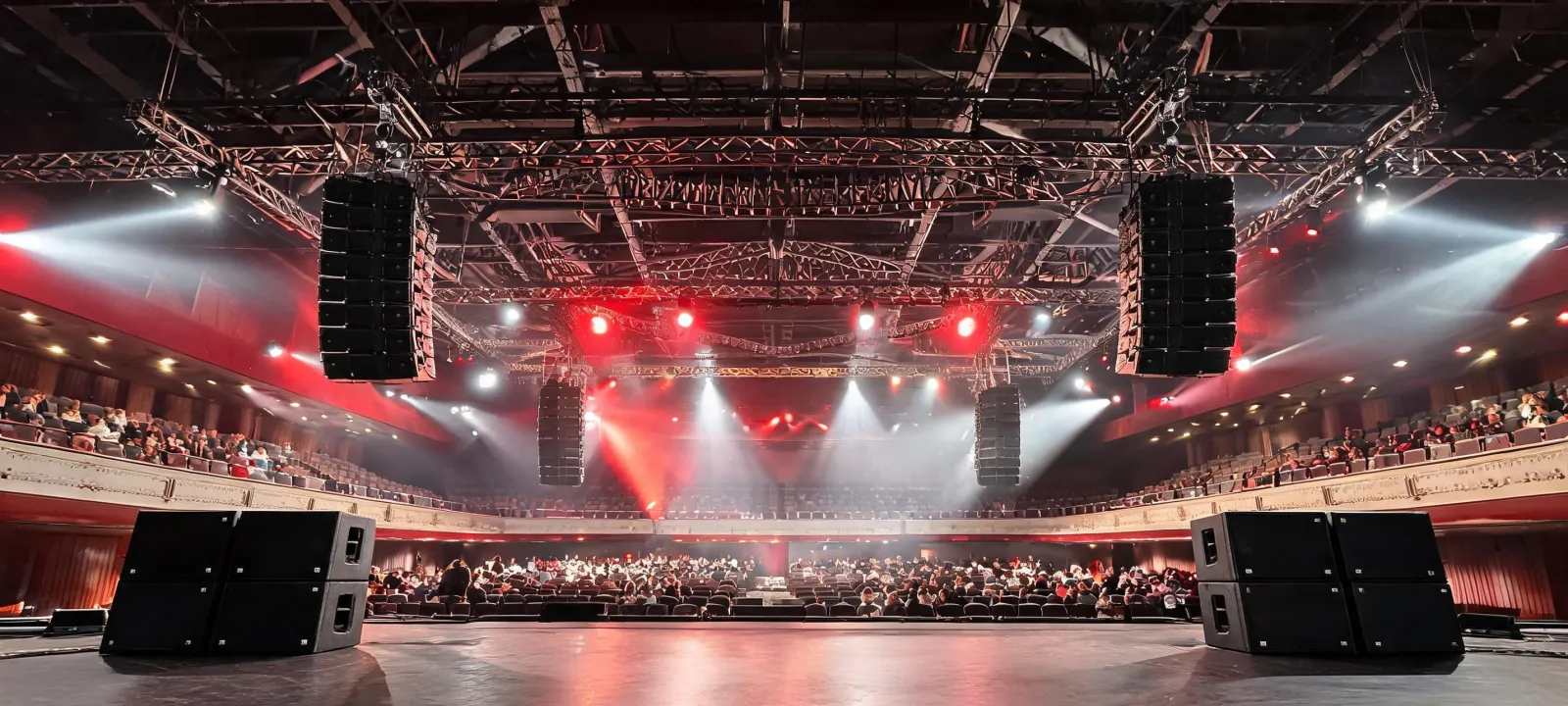
Touring live sound stage

Live Sound Touring

Fast rigging, predictable array behavior, and strong low-frequency planning help production teams move from city to city without rebuilding the design from scratch. Touring blocks typically combine flown line array modules of 8 to 16 boxes per side with ground-stacked 21-inch subwoofers, where the splay set on day one has to hold across rooms of very different depth.
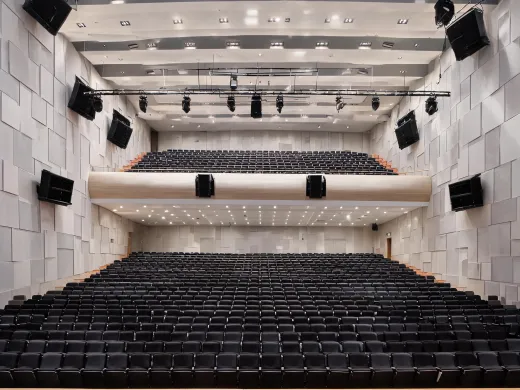
Installed venue sound system

Installed Venues

Permanent systems must protect coverage, aesthetics, maintenance access, and operator confidence long after the commissioning team has left the building.

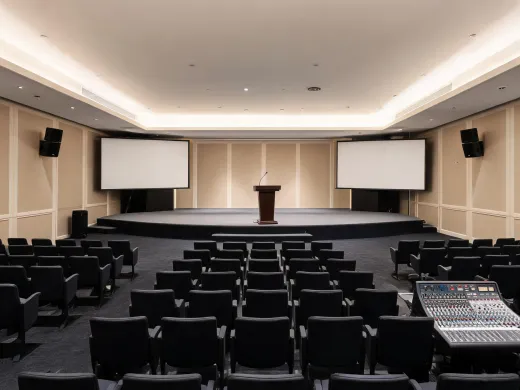
Corporate conference audio setup

Corporate Conference

Speech clarity, consistent levels, clean stage monitoring, and low visual intrusion are often more important than spectacle in enterprise meeting rooms. Coverage here is judged on intelligibility, where holding the speech band roughly within plus or minus 3 dB from the front rows to the last seat matters more than peak level.

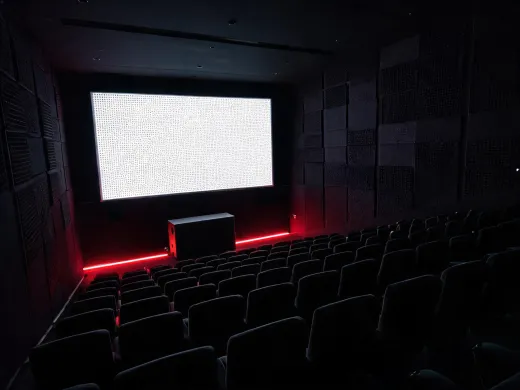
Cinema audio room with speakers

Cinema Rooms

Screen channels, surround coverage, and subwoofer behavior must work together so dialogue, impact, and immersive cues remain believable across seats.

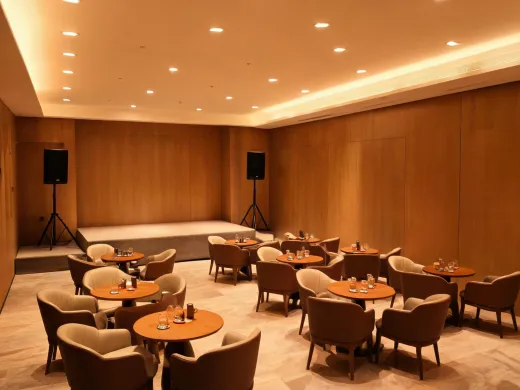
Hospitality performance lounge audio

Hospitality and Retail

Compact systems need controlled output, music quality, and dependable zoning without overwhelming architecture or daily operations.

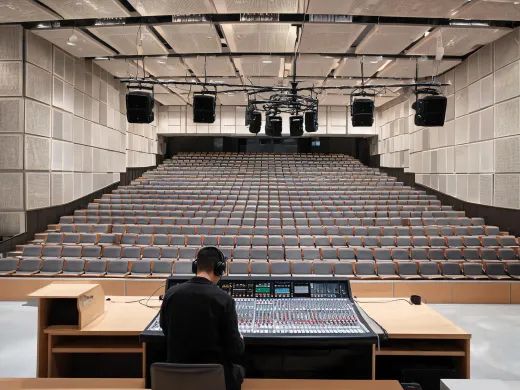
Education auditorium audio system

Education

Lecture halls and campus performance spaces require systems that handle speech, music, visiting productions, and mixed operator experience.

Selection considerations

The system trade-offs we walk through before a venue commits

There is rarely one correct loudspeaker family for a room. The honest work is naming the tension between competing goals so the venue chooses with open eyes. Martin Audio frames these around even audience coverage rather than headline output.

Line array versus point source

Line arrays give controlled vertical throw and front-to-back consistency in deep rooms, but they need height, rigging capacity, and more cabinets to behave. A point-source design is lighter, faster, and often cleaner in low-ceiling or short-throw rooms, at the cost of even coverage in long halls. The deciding factor is room depth and trim height, not prestige.

Touring SPL targets versus install coverage uniformity

A touring brief is usually written around peak SPL and impact for one energetic show. A permanent install is judged on coverage uniformity across every seat for years of mixed programming. The same cabinet count optimised for raw level will often read as uneven in a worship or lecture room, so we tune install systems for the quietest seat first.

Cardioid sub arrays versus simpler stacks

Cardioid subwoofer arrays reduce energy on stage and behind the system, protecting intelligibility and neighbour limits, but they consume more cabinets, amplifier channels, and setup time. A simple ported stack is cheaper and faster, yet sprays low end where it may not be wanted. The choice tracks the room boundaries and the crew time available on site.

Powered cabinets versus passive plus external amplification

Self-powered boxes simplify cabling and travel for rental and smaller installs. Passive cabinets driven by external amplifier and processing racks centralise control and service access for large permanent venues. Neither is universally better; the right answer follows who maintains the system and how often it moves.

Honest limits

What a coverage plan cannot promise

A reliable recommendation is clearer about its boundaries than its slogans. These constraints apply across the venue types above and are stated up front rather than discovered during commissioning.

6application families
3primary coverage priorities
2deployment modes
1audience-first target
Application review

Match the system to the room before selecting the cabinet count.

Share the venue type, audience layout, event program, mounting conditions, and support expectations. The next conversation can then focus on a practical system path instead of a generic product shortlist.