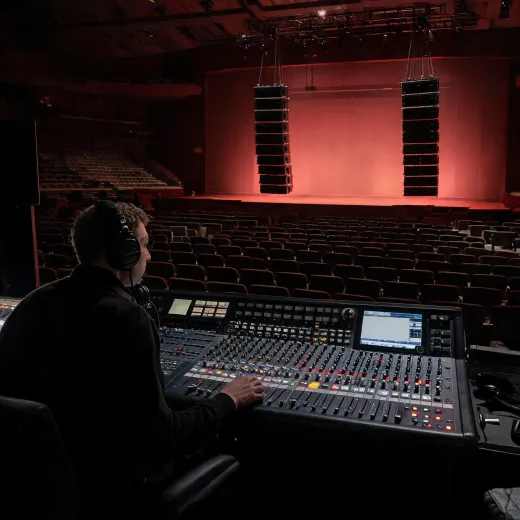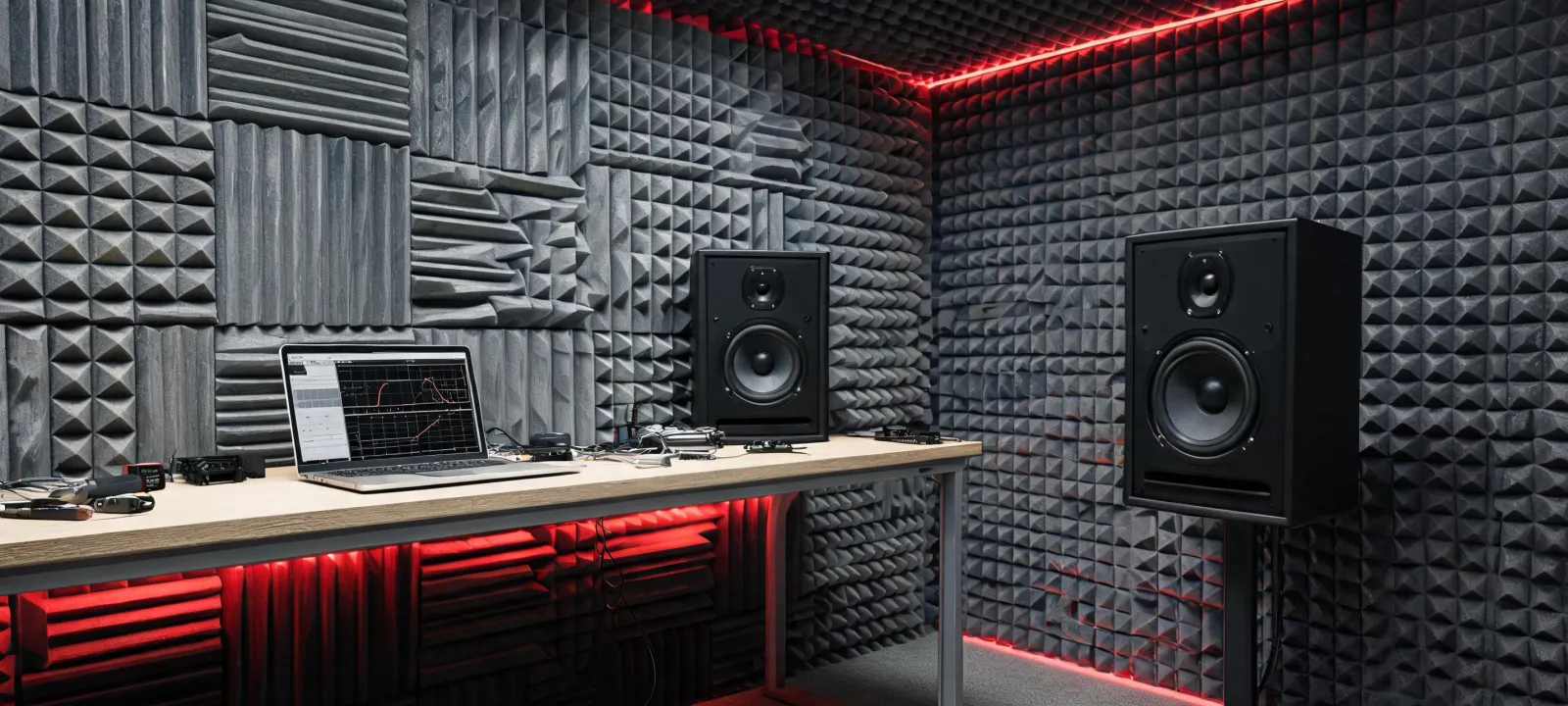
Martin Audio workshop and listening room
About the company

Martin Audio brings touring discipline into permanent sound decisions

The Martin Audio approach is practical and dependable: careful system thinking, clear project language, and a bias toward decisions that can be executed by real crews in real rooms.

Mission

Make the audience area the reference point

Professional loudspeaker work is not finished when a cabinet looks impressive in isolation. The meaningful test is whether the audience hears intelligible speech, musical impact, and a coherent tonal balance across the full seating plan. Martin Audio work is shaped around that standard, from product selection to services and applications. In practice that means a system is judged by how tightly it holds level across every seat, often a plus or minus 3 dB target front to back, not by the number printed at the mix position.
Vision

Support systems that remain useful after opening night

A reliable partner does not leave a venue with a mystery rack and a beautiful launch photo. Long-term value comes from documentation, repeatable workflows, room-appropriate headroom, and product choices that operators can understand. That is why Martin Audio emphasizes handover, coverage logic, and practical system matching rather than abstract claims.

Working culture

Values that matter when the room is full

Listen first

The best system brief often hides in the constraints: balcony depth, rigging weight, neighbour limits, volunteer turnover, load-in time, or the room geometry that never appears in a simple product comparison.

Design for operators

A sound system is used by different people over its life. Controls, presets, labels, and documentation should reduce mistakes for touring engineers and house staff alike.

Protect tonal consistency

Audience trust depends on coverage that does not radically change from one section of a venue to another. Loudspeaker choice, aiming, and fill strategy all serve that promise: a line array hung at 8 to 16 modules, point-source fills near 90 by 60 degrees, and 15 to 21-inch subwoofers are matched so the spectral balance holds rather than collapsing toward the centre seats.

Keep service practical

Support should help teams make a decision, not bury them in theatrical language. Clear drawings, grounded assumptions, and honest trade-offs keep a project moving.

State the limits

A reliable partner says what a system will not do. Coverage uniformity is bounded by the room shell, continuous output sits below the spec-sheet peak because of power compression, and outdoor or reverberant spaces drift from the model. We put those boundaries in writing rather than leaving them to be discovered on a show night.

Talk to a project team

Bring us the room, the schedule, and the audience goal.

Whether you manage a venue, specify commercial sound, or prepare touring inventory, a reliable conversation starts with facts that can be tested in the field.