I can tell a lot from the first question someone asks me.
When a production manager calls and says, 'Can you get a Martin Audio MLA system with subs and processing to a festival site in 36 hours?'—that's a project. When someone emails and asks, 'What's the Martin Audio speakers price?'—that's a research project. I live in the execution world. But I've spent enough time in the emergency lane to know that price-first thinking is exactly why so many projects end up in the emergency lane in the first place.
I'm an operations lead at a regional sound production company. I've handled 200+ rush orders in five years, including same-day turnarounds for festivals and corporate launches. Last quarter alone, we processed 47 rush orders with 95% on-time delivery. In March 2024, 36 hours before a festival, the headliner's production manager asked us to switch from a standard left-right hang to a Martin Audio MLA array because of sightline issues. Normal turnaround for a rigging redesign: four days. We had thirty-six hours. We found the hardware, paid double in rush fees, and pulled it off. The alternative wasn't just an awkward conversation. It was a $50,000 penalty clause.
The Surface Problem: You're Comparing Prices
If you're reading this because you typed 'martin audio speakers price' into Google, you're probably not planning to buy a single box for your living room. You're bidding on a project. A festival side stage. A corporate launch. A house of worship that's tired of muddy sound. You saw the price for a Martin Audio MLA system and thought: there's no way. Or: maybe I can piece together something cheaper.
Here's the thing: that's not a price problem. It feels like a price problem. But it's actually a clarity problem. You're asking the wrong question before you even know what to ask.
What You're Actually Asking When You Search 'Martin Audio Speakers Price'
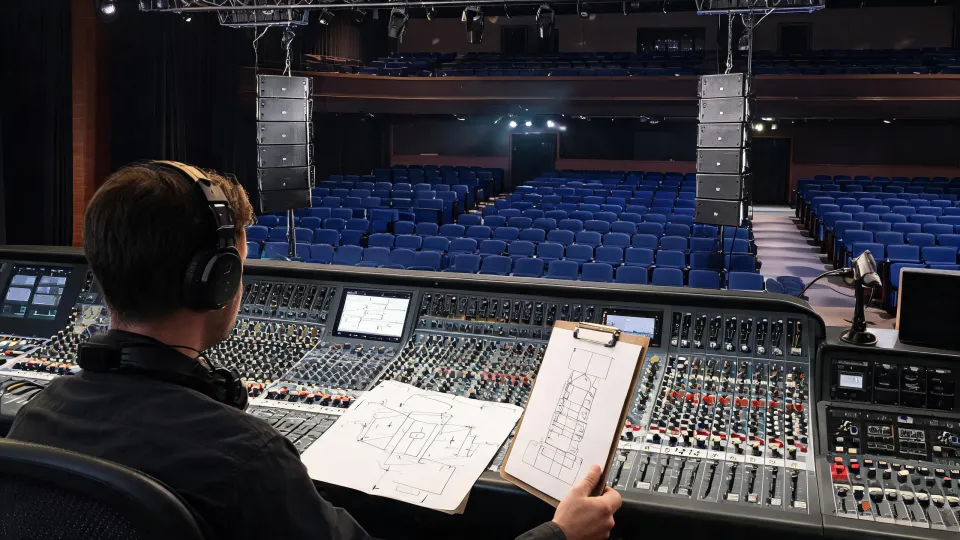
Why does this matter? Because the object you're pricing isn't a speaker. It's a system. A Martin Audio MLA cabinet is one link in a chain: cabinets, rigging, amplification, DSP, prediction software, and a technician who can use all of it. The MLA in Martin Audio MLA stands for Multi-cellular Loudspeaker Array—it's a design approach, not a single box. The price alone won't tell you whether the system will cover the room, fit the rigging points, or pass the visiting engineer's inspection.
It's tempting to think you can just compare spec sheets. You can't. Two loudspeakers can have the same SPL rating and behave completely differently in a wide open field versus a narrow reverberant hall. Specs are a starting point, not a guarantee. Per FTC guidelines (ftc.gov), advertising claims must be truthful and substantiated—but a truthful spec sheet still doesn't tell you what happens when eight boxes are flown together and the wind picks up.
There's another uncomfortable detail: public pricing is mostly theater. List prices are real, but street pricing depends on configuration, volume, relationship, and whether the supplier wants the project. I'm not saying anyone is tricking you. I'm saying a one-line price for a 'martin audio speakers price' query is like asking how much a car costs. A Fiat and a fire truck are both vehicles. The range is not useful.
The deeper problem is that we've been trained to think in boxes. We ask what a mixer costs, not what a mixing system costs. We ask what a sub costs, not what the sub's coverage pattern does to a stage. That's why 'mixer audio rack' is its own keyword—people discover, too late, that the console they just bought doesn't fit the rack they already own. It's not a gear problem. It's an integration problem.
The Cost of Starting With the Wrong Question
When clients come to me after buying gear to save money, the total cost after the purchase is usually higher than the price they avoided. I've watched a $12,000 project burn an extra $3,000 in troubleshooting time because someone saved $800 on a 'compatible' processor. The delay pushed soundcheck into dinner hour. The client lost their event placement. The vendor got blamed. Nobody won.
Same with the mixer audio rack. A rack built without proper power sequencing, ventilation, or patchbays will create a problem during the one rehearsal that matters. The band is waiting. The production manager is watching. You spend 45 minutes chasing a ground loop. That's not an equipment cost. That's an emergency labor cost.
I also see people compare completely different product categories. A client once asked me if a sky high car audio subwoofer could handle a side stage. I laughed—then I apologized. A sky high car audio subwoofer is designed for a small cabin with different loading and different power delivery. A professional subwoofer is engineered to be driven hard for hours, in all weather, with predictable coverage. The two are not interchangeable. If you're comparing them, you're not comparing speakers. You're comparing risk tolerances.
In my first year, I made the classic beginner error: I assumed 'line array' meant the same thing to every brand. It doesn't. I learned that lesson the hard way when a vendor's 'compatible' hanger didn't fit our rigging points. Cost me a $600 redo plus a very long night. That's when I stopped searching by price and started asking about integration.
The October 2023 vendor failure—a promised delivery that never arrived—changed how I think about backup planning. We lost a $20,000 contract because we tried to save $1,200 on a standard rental instead of confirming a backup. That's when we implemented our 'two-source rule': every critical system needs a second vendor who can deliver the same spec on short notice. Redundancy doesn't seem like overkill after you've watched a stage sit silent.
I don't filter calls by invoice size. Some of my best clients started with a $200 rental. The vendors who treated those small orders seriously are the ones I still call for $20,000 projects. Small doesn't mean unimportant—it means potential.
The Shorter Path Than You Think
So what should you do instead of price-searching 'martin audio speakers price'? Start with the outcome. What's the venue? How many people? What's the coverage shape? What's your budget for the total system, not just the loudspeaker cabinets? Then work backward from the result you need.
- Rent first. If you're not sure a Martin Audio MLA system is right, rent it for a show and listen before you buy. Rental costs are small compared to a wrong purchase.
- Ask for the system design, not just the price. A good supplier will show you coverage data, rigging plan, and amp count. If they can't, that's a red flag.
- Include the mixer audio rack in your plan. Console, I/O, power, ventilation, patchbays. It's part of the system.
- Calculate total cost of ownership. Purchase price is the beginning. Transport, rigging, maintenance, and resale value all matter.
- Talk to someone who handles rush orders. If you call and say 'I need an answer in 48 hours,' you'll find out fast whether the supplier is a partner or just a price.
Look, I'm not saying Martin Audio is the only option. I'm saying the search for 'martin audio speakers price' will never tell you what you actually need. The right first question isn't 'how much?' It's 'what are we trying to solve?' Answer that, and the price conversation becomes much less scary—and much more useful.