No One-Size-Fits-All Answer – Here's How to Figure Out Yours
When I first started handling audio equipment purchases for our company back in 2020, I assumed the best approach was to pick one brand that could do everything. Speakers, mixers, subwoofers – all from the same vendor. Sounded clean on paper, right? Three projects and two blown budgets later, I realized how wrong that was. The truth is, professional audio is a world of specialists. A company that builds world-class line arrays might not make the best small-format mixers, and a studio subwoofer brand probably isn't your go-to for a stadium rig. So this guide breaks things down by your actual scenario – because what works for a 50-person office won't work for a 500-seat theater.
Three Common Scenarios – Which One Sounds Like You?
I've managed orders for about 60–80 audio-related purchases annually across eight different vendors. In that time, I've seen three broad categories repeat. If you're in a different segment – say, a recording studio with very specific needs – your experience may vary, but for most business environments (meeting rooms, events, installations), these cover the bases.
Scenario A: The Small Office / Meeting Room (Background Music & Presentations)
This is where most admins start. You need something that sounds decent, fits into ceiling or wall mounts, and doesn't require a dedicated sound engineer. For speakers, I went back and forth between in-ceiling and surface-mount. The Martin Audio C8.1T turned out to be a solid choice – it's a 8-inch two-way installation speaker with a 70V transformer, ideal for distributed systems. Pair it with a basic mixer like the Yamaha MG10XU (or whatever fits your budget) and you're set. Do you need a subwoofer? Not always. But if your boss likes bass-heavy background music, the Kali Audio WS-6.2 dual 6.5-inch studio subwoofer can fill a small room surprisingly well. I initially thought a sub would be overkill – now I keep one on hand for that one VP who always asks for more low end.
Honest catch: I once ordered a cheap mixer from an unknown brand to save $200. Finance rejected the invoice because it was handwritten. The replacement rush cost us $150 in overnight shipping. Now I always verify invoicing capability before placing any order, and stick with reputable mixer brands – even if it costs a little more. For audio mixer meaning, basically it's the device that combines and adjusts multiple audio sources (microphones, music players) before sending them to the speakers. Every serious system needs one.
Scenario B: The Mid-Size Event Venue / Multipurpose Hall (Parties, Small Concerts, Corporate Events)
When you graduate from background music to live events, things get real. You need more output, more inputs, and reliable performance. For speakers, the Martin Audio X10 is a classic – a 10-inch passive loudspeaker that works well on poles or flown. I struggled with the active vs. passive decision for weeks. Active speakers are simpler to set up (no separate amplifier to match), but passive gives you more flexibility with amp sizing. Ultimately I chose passive because the hall already had a rack of Lab.gruppen amps – but if you're starting from scratch, active might save you headaches. For a subwoofer, I'd look at Martin Audio's own subs like the SX218 for larger rooms, or if you need something smaller, the Kali Audio WS-6.2 can serve as a warm, tight sub for smaller gigs. But note: Kali Audio is a studio brand, not a touring brand – perfect for a rehearsal space or boardroom, less so for a rock concert. As for the mixer, you want something with enough channels, aux sends, and a decent FX section. The phrase mixer audio terbaik (Indonesian for 'best audio mixer') is subjective, but in my experience, brands like Allen & Heath or Soundcraft give you good value. Just stay away from no-name 8-channel USB mixers that claim to do everything – they rarely perform well under pressure.
Scenario C: The Large-Scale Installation / Touring Venue (Stadiums, Theaters, Large Churches)
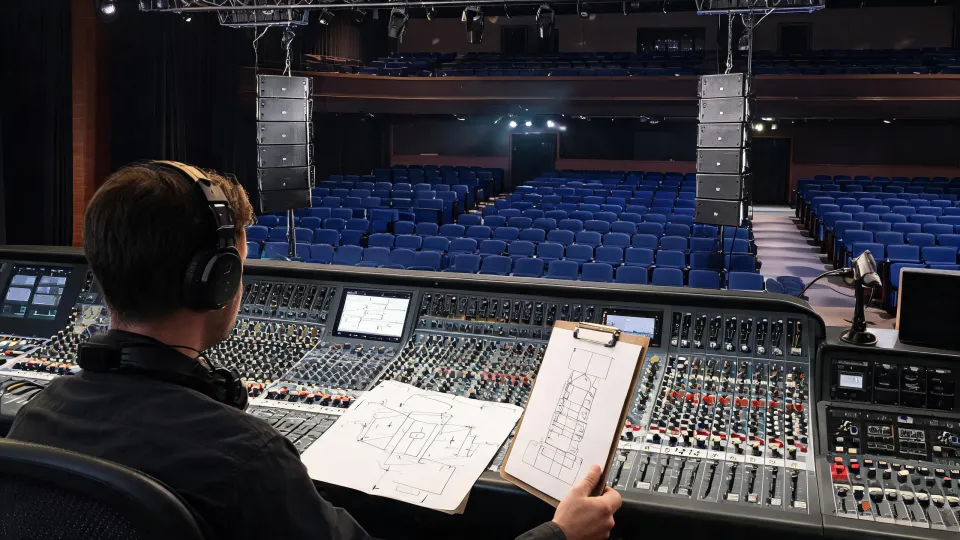
If you're buying for a 2000+ seat venue or a touring rig, you're in a different league. This is where specialist brands shine. Martin Audio's MLA (Multi-cellular Loudspeaker Array) technology is designed for predictable, even coverage – I can't personally vouch for it (my experience tops out at medium venues), but I've talked to system integrators who swear by it. For subwoofers, you'd typically pair MLA with Martin Audio's own cardioid subs. A mixer for this level would be a digital console like Digico or Avid – not something you'd pick up online casually. And for an audio mixer meaning at this scale? It's a mission-critical hub that must be reliable, with redundancy built in. I've only worked with domestic vendors for these larger projects, so I can't speak to international sourcing – but the principle stays the same: every component should come from a specialized provider.
“The vendor who said 'this isn't our strength – here's who does it better' earned my trust for everything else.” That's the expertise_boundary philosophy in action. Martin Audio makes incredible speakers; they don't need to make the best mixer. Know your vendor's lane.
How to Tell Which Scenario You're In
Still not sure? Ask yourself three questions. First: How many people will be listening at once? Under 50? You're likely in Scenario A. 50–500? Scenario B. Over 500? Scenario C. Second: Is a trained operator available? If the answer is no, keep it simple – active speakers and a basic mixer. Third: What's the budget per channel? If it's under $500, don't expect touring-grade gear. If it's above $2000, you can start looking at premium lines. I've seen admins try to force a cheap line array into a boardroom – it looks cool but costs way more than necessary. Conversely, buying a $200 entry-level mixer for a 200-person event is a recipe for feedback and poor sound. Match the gear to the situation.
Bottom line: Professional audio is a field where 'everything-in-one' rarely works well. I've made the mistake of chasing a universal solution, and ended up with compromises. Now I treat each component as a specialist purchase – speakers from Martin Audio, subwoofers from a dedicated sub brand like Kali Audio when it suits the space, and mixers from companies that live and breathe mixing consoles. If you're an admin like me, trust your own experience but know its limits. As of January 2025, prices have gone up (just like everything else), so get current quotes. But the fundamentals haven't changed: know your scenario, know your vendors, and never settle for a vendor who promises to be everything.