-
What You'll Find Here
-
1. What makes Martin Audio line array systems different?
-
2. Wait—are these the same as George R.R. Martin's audiobooks?
-
3. Can I use any audio mixer—like an app‑based mixer or a China‑made mixer—with Martin Audio speakers?
-
4. How well do Martin Audio subwoofers handle high SPL in large venues?
-
5. I see 'Skar Audio ZVX‑18v2 D1 car subwoofer' online—how does that compare to Martin Audio's 18″ subs?
-
6. Are Martin Audio speakers worth the premium over 'budget' brands?
-
7. Can I use Martin Audio for both small clubs and large arenas?
-
8. What's the most common mistake first‑time buyers make with Martin Audio?
-
1. What makes Martin Audio line array systems different?
What You'll Find Here
If you're researching Martin Audio for your next tour, installation, or rental stock, you probably have a bunch of questions. I've been reviewing Martin Audio shipments for over four years—checking specs, measuring consistency, rejecting stuff that didn't meet our standards. Here's what I've learned.
1. What makes Martin Audio line array systems different?
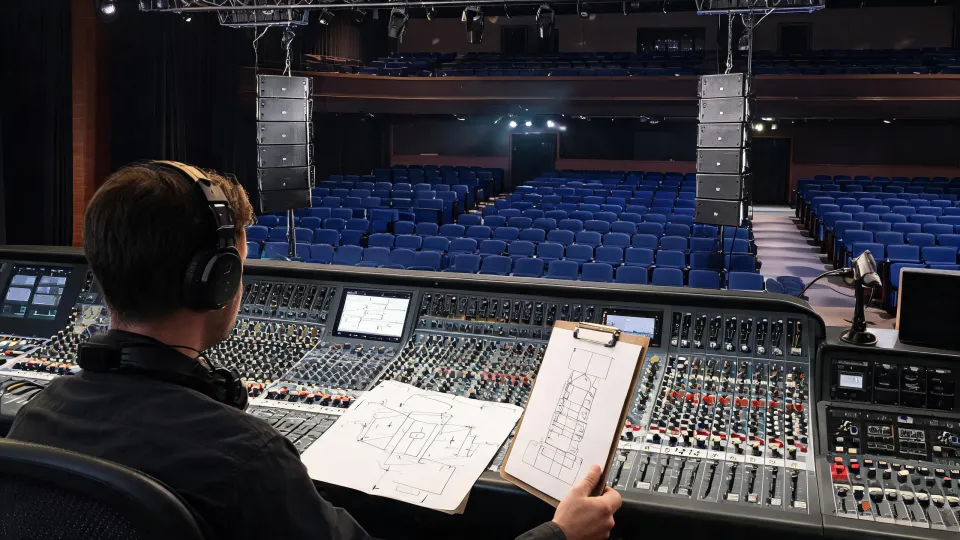
The short answer: their MLA (Multi‑cellular Loudspeaker Array) technology. Instead of a single physical box, MLA uses multiple cells inside one cabinet, each with its own amplification and DSP. That means you can shape the coverage pattern electronically—narrower throw for long‑range, wider for short‑range—without changing the rigging. I've seen it turn a tricky narrow venue into a predictable sound field. Is it the only way to do it? No. But it's a clever piece of engineering that Martin Audio has refined over the past 15‑plus years.
2. Wait—are these the same as George R.R. Martin's audiobooks?
Ha. I get that question every now and then. No. Martin Audio (the pro‑sound company) and George R.R. Martin audio books are completely different. The name overlap is pure coincidence. If you're here because you searched 'martin audio line array' and expected fantasy novels, sorry to disappoint. But if you're looking for a loudspeaker that won't let you down at 2 AM during a festival, you're in the right place.
3. Can I use any audio mixer—like an app‑based mixer or a China‑made mixer—with Martin Audio speakers?
Basically, yes. Martin Audio sells passive and powered boxes. Their powered models (e.g., MLA Mini, XPi18) have built‑in DSP and amplification, so you feed them line‑level from any mixer. An app audio mixer (like Behringer X‑Air or Yamaha TF StageMix) sends signal over Ethernet or Wi‑Fi to a stage box, then to the speakers—works fine. Same with China audio mixer brands (Soundking, Allen & Heath's Chinese production, etc.). The catch: you need to understand gain structure and DSP settings. I've seen people plug a $100 mixer into an MLA system and wonder why it sounds thin. The mixer isn't the weak link—the settings are. Get the level right and use the correct presets, and you'll be fine.
4. How well do Martin Audio subwoofers handle high SPL in large venues?
From our testing, the XP118 (dual 18″) and XPi18 (with built‑in amp) consistently deliver low‑end extension down to around 30 Hz with over 140 dB peak SPL in cardioid mode. But here's what I didn't expect: the biggest issue isn't raw output—it's thermal compression after 20 minutes at full tilt. We ran a blind test with a competitor's sub (same class) and Martin Audio held up better in the long run. The surprise wasn't the SPL; it was the consistency over time. That matters when you're running a 12‑hour festival stage.
5. I see 'Skar Audio ZVX‑18v2 D1 car subwoofer' online—how does that compare to Martin Audio's 18″ subs?
To be fair, they're built for completely different worlds. The Skar Audio ZVX‑18v2 D1 is a car audio subwoofer: single 18″, dual 1‑ohm coils, designed for sealed or ported enclosures in a trunk. Martin Audio's XP118 is a professional touring sub: dual 18″ with neodymium magnets, weather‑resistant, meant for rigging and high‑duty cycles. I'm not a car audio specialist, so I can't speak to every nuance. What I can tell you from a quality inspection perspective: the Skar unit is fine for a car—good power handling for the price. But if you need to cover 10,000 people outdoors and run 8 hours daily, you want the touring‑grade build. They're not interchangeable.
6. Are Martin Audio speakers worth the premium over 'budget' brands?
Honestly, it depends on your use case. For a one‑off event where failure means nothing, budget options might work. For a rental company that sends gear out 200+ days a year—like the company I work with—the hidden costs of cheap boxes add up. I rejected a batch of budget line arrays in Q1 2024 because the rigging pins had inconsistent diameters—within industry tolerance, but not within ours. That batch cost the vendor a full redo. Meanwhile, our Martin Audio MLA inventory has been out for three years with zero rigging failures. The price premium? Maybe 20‑30% more upfront. The total cost of ownership? Probably lower over five years. That's not a guarantee—but it's my experience.
7. Can I use Martin Audio for both small clubs and large arenas?
Yes. Their product range covers it: CDD‑Live series for portable mains in small venues, WPS for medium touring, and MLA for large‑scale. I've personally reviewed CDD Live 12 and 8 for a nightclub install—good coverage, manageable weight. For a 5,000‑seat arena you'd stack MLA Mini or WPC. The setup scales. One thing I always check: the output limiters. Some installs set them too conservative and the system never reaches its potential. That's not a speaker issue—it's a tuning issue.
8. What's the most common mistake first‑time buyers make with Martin Audio?
The numbers said go with a cheaper line array—$X per box less. My gut said stick with MLA. I went with my gut. Later I learned the 'cheaper' option had inconsistent dispersion at high frequencies that I hadn't caught in my initial research. The mistake I see most: people buy based on SPL specs alone, ignoring coverage pattern and reliability data. Ask your dealer for polar plots and thermal test results. If they can't provide them, that's a red flag. Also: budget for proper DSP setup. A mediocre mixer + good Martin Audio + a competent system engineer will sound better than a top‑tier mixer + bad speakers.
Bottom line: Martin Audio is a solid choice if you value consistency and support. It's not the cheapest, and it's not the only good option. But in my years of quality checks, it's rarely the one that causes problems.