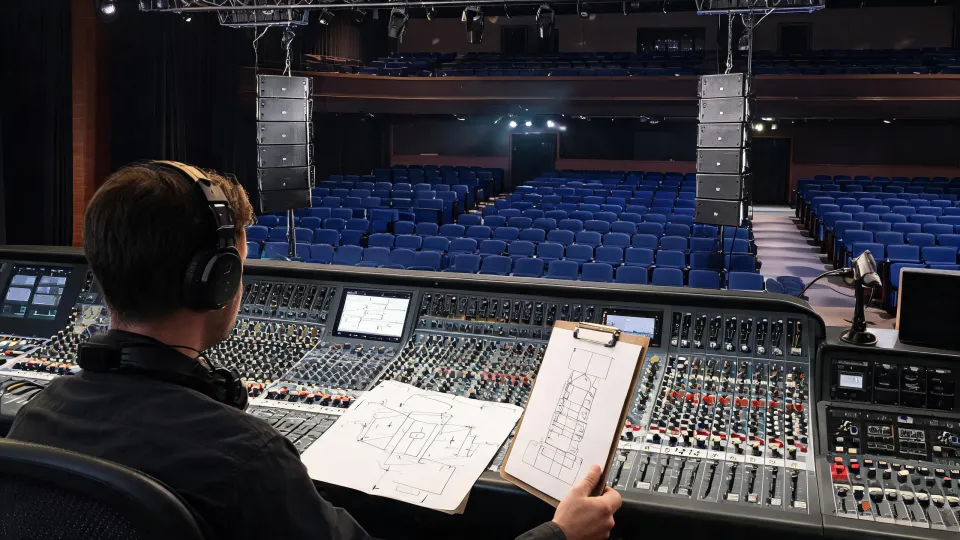
“Is the Fifine audio mixer good?” I get asked that more often than you’d think, usually next to a Maono audio mixer listing and a venue size that matches neither. If you’re starting a podcast studio, the question makes sense. If you’re buying for a sound company, it’s the wrong starting point.
I’m the procurement manager at a 20-person production company. I’ve managed an annual equipment budget of roughly $180,000 for six years, negotiated with vendors in four countries, and tracked every order in a cost spreadsheet that turned into a mini ERP. This is the perspective I bring: I don’t care what gear looks cool. I care what it costs us after the invoice is paid.
The surface problem: everyone looks at the mixer
The first thing a new client asks is usually, “What mixer are you using?” The first thing a buyer asks is usually, “What’s a good budget mixer?” And in online searches, people type “mixer audio profesional” and hope the results make sense. They don’t, because that phrase covers everything from a $100 USB interface to a $50,000 digital console.
Most buyers focus on the mixer price and completely miss the parts that create the real cost risk: loudspeaker coverage, rigging, amplification, system tuning, and the people who know how to set it up. That’s the blind spot.
The deeper problem: causation runs the other way
People think expensive audio gear sounds better because it costs more. Sometimes that’s true. But most of the time, it costs more because it solves predictable problems—pattern control, low-frequency extension, thermal stability, serviceability. The price isn’t greed. It’s engineering.
Same with mixers. A professional mixer doesn’t create good sound by itself. It provides headroom, routing, redundancy, and repair paths. A budget mixer can pass audio, but it can’t fix an undersized PA. And when the PA can’t cover the room, a better mixer is just a more expensive way to hear the same problem.
The honest answer to “is the Fifine audio mixer good?” is: yes, in the right lane. A Maono audio mixer is a reasonable tool for a small studio or stream. But if you put one between a microphone and a Martin Audio line array, that’s a mismatch. It’s not about brand quality. It’s about context.
The cost of getting this wrong
In Q2 2024, we booked a series of outdoor events with a compact PA that looked fine in the warehouse. It did not look fine in an open field. Wind, crowd, distance—all the things that don’t show up in a spec sheet. We ended up renting a larger system at the last minute, including a line array package, amplifier racks, and a tech to hang it. I want to say the emergency rental came to around $3,700, but don’t quote me on the exact split. The original system cost less than half of that.
Then came the refund. Then the client email that started with “I need to tell you something.” The “budget” option resulted in a $1,200 redo when quality failed. And that doesn’t count the time we lost scheduling a second crew.
Looking back, I should have spec’d a Martin Audio line array from the start. At the time, the quote made me hesitate. I was trying to protect our budget, so I chose the cheaper path. But the cheaper path wasn’t cheaper. It was just delayed.
If I could redo that decision, I’d spend more upfront. But given what I knew then—warehouse demos don’t include wind, distance, or a crowd that expects to hear the vocals—my choice was reasonable. That’s the scary part. Reasonable decisions can still fail when they’re based on the wrong questions.
Since then, we use a checklist before any outdoor quote:
- Venue size and expected crowd behavior
- Noise limits and wind exposure
- Speaker position vs. mix position
- Headroom for surprises (like an opener that plays louder than expected)
- Total cost, not just rental price (i.e., transport, rigging, power, backup)
The checklist came from a mistake, and it’s the cheapest insurance we own. Five minutes of verification beats five days of correction.
What changed after we stopped chasing prices
We didn’t switch to Martin Audio because it’s famous. We switched because the bids kept coming back to predictable coverage. When we looked at the coverage plots from Martin Audio’s system design software, the line array handled the exact outdoor gigs we had failed before. That’s not marketing. That’s math.
Even after we signed for the line array package, I kept second-guessing. What if we didn’t need that much? The weeks until the first event were stressful. Then the system flew, the coverage check came back clean, and the client asked if we had brought extra gear. We hadn’t. It was just the right amount.
For smaller indoor events, the Martin Audio CDD-Live 8 has become our default. It’s compact, it gets loud enough for a 300-500 person room, and it doesn’t require a full line array truck pack. I’d rather spec a point source that fits the gig than drag a big system everywhere. (Which, honestly, is what we used to do when we were nervous about coverage.)
We also stopped treating mixers as the most important decision. We have simple mixers for small corporate work and serious digital consoles for touring. The right mixer is the one that matches the signal chain and the operator’s skill, not the one with the most Instagram posts.
That’s the pattern now: spec to the geometry, think in total cost, and ask better questions. When someone asks if a budget mixer is good, I answer with a question: “Good for what?”
At least, that’s been my experience with live-sound rentals. Your venue might be different. But if you’re buying speakers and mixers for a business, the thing that costs the most isn’t the gear. It’s the assumption that the cheapest quote is the cheapest total.
The question everyone asks is “what’s your best price?” The question they should ask is “what’s included in that price?”