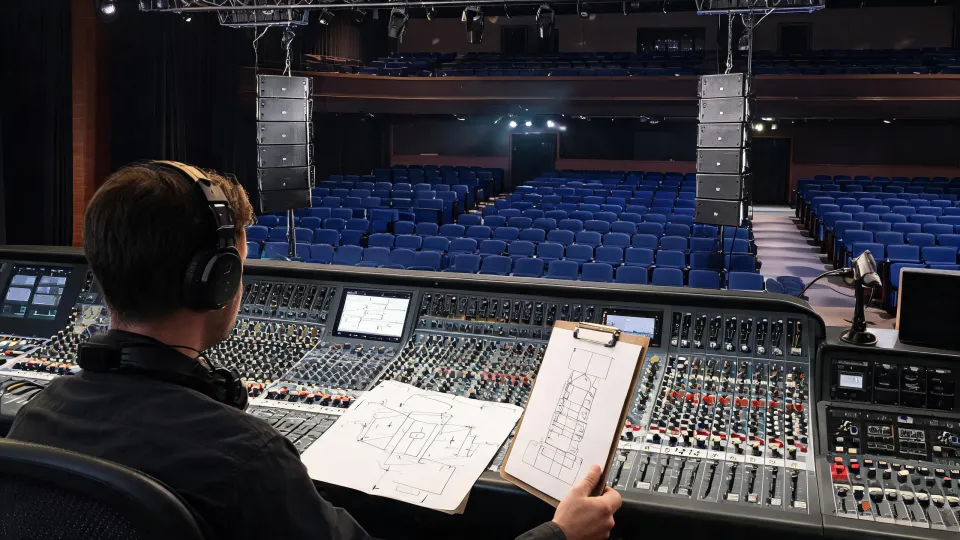
First, a detour. If you came here hoping for Charles Martin audio books recommendations, this is not that article. (Sorry.) But if you are comparing martin-audio loudspeakers, the martin audio le100, or trying to understand an audio mixer XLR output, let's talk.
I manage procurement for a small live sound and installation company. I have tracked our equipment spending for six years, and I have learned to look at total cost of ownership (meaning invoice price plus rigging, cables, delivery, training, and repair time) before I get attached to a product name. There is no single 'right' pickup that works for every venue. That is the whole point of this article.
Audio mixer news in 2025 keeps circling the same narrative: digital consoles now have more features for less money. That is true. But the XLR output stage is still where I check first. If the mixer cannot deliver a clean balanced signal to every destination—mains, subs, monitor zones, or broadcast feed—the software features do not matter.
For readers who search in Indonesian: fungsi mixer audio is to combine, route, and balance audio signals. The mixer sends the final result through output connectors, and in professional setups those connectors are usually XLR. So when you see the phrase audio mixer XLR output, think of it as the bridge between the mixer and the powered speakers or amplifiers.
Three scenarios, not one universal answer
Now let me split the purchase decision into three scenarios. In each one, the right martin-audio package and mixer configuration is different.
Scenario 1: Rental and touring inventory
If the gear is going to leave the building, most of your decisions are about durability and repeatability. This is where martin-audio's MLA line arrays and WPS systems are famous for good reason. You are not buying speakers; you are buying coverage prediction and rigging consistency.
In this scenario, the LE100 might work as a fill speaker, but do not assume you can hang it with leftover clamps. I'm not 100% sure which LE100 variant your dealer is quoting, so verify the dispersion angle and mounting hardware before approving the order. When I audited our 2023 spending, I found that flying hardware added 22% to one 'bargain' speaker package. (Mental note: always add rigging to the first quote comparison.)
For the mixer, buy a digital console with a stagebox that gives you extra XLR outputs. In rental, the last thing you want is a venue where you need more output sends than the console has. In Q2 2024, we switched from a console with 12 XLR outputs to one with 16 and quietly retired an external line mixer that had been creating phantom-power headaches for years. That was a surprise: the 'bigger' console actually saved us two rack units and one recurring service call.
If you are only doing small corporate events, a full MLA system is likely overkill. The honest limitation: arrays with huge coverage are pointless in a hotel ballroom. A compact mixer with six balanced XLR outputs and a pair of powered speakers might be the smarter rental inventory.
Scenario 2: Fixed installation in a venue or house of worship
For installation, serviceability matters more than portability. Martin Audio's CDD-Live or BlacklineX series are usually the right conversation. But if a dealer quotes the LE100 as an under-balcony or delay fill, that can be a good fit—provided spare drivers and the mounting bracket are available.
Check the audio mixer XLR output spec carefully. You need balanced outputs. According to AES14-1992, pin 1 is ground, pin 2 is positive, and pin 3 is negative. When a wiring mistake is made on one line, the speakers arrive out of phase. (I learned this after a service where the bass disappeared; it took 20 minutes to find a single reversed pair of pins.)
Counterintuitive advice: in a fixed install, spend less on mixer processing power and more on output connectors and cabling. A mixer with 16 buses but only a single underspecified output stage is not worth a premium. The fungsi mixer audio is to mix, not to decorate the rack.
That said, if your room is a gymnasium or a convention hall with hard surfaces, a small speaker may not cover it. The 'works for 80% of cases' line I hear from dealers is not a law of physics. Use the coverage software before buying.
Scenario 3: Tight-budget school, small church, or civic room
This is the scenario where the LE100 often appears in a cost spreadsheet because its price is lower than the big array elements. I get it. But do not buy on the sticker price alone. In 2023, I compared quotes for three speakers and found that the cheapest one needed $890 in extra flyware, a $240 speaker stand adapter, and $310 in custom cabling. The 'expensive' option included all of that. Hidden total cost difference was 14%—in favor of the option that looked more expensive at first.
For the mixer side, a compact digital unit with 16 inputs and 8 XLR outputs is usually enough for a small room. But if you only need mains, subs, two monitors, and a recording feed, that is six balanced audio mixer XLR output sends. A 32-output console is wasted money. (I know that seems obvious, but I've seen teams buy more mixer than the room can load.)
Had two hours to decide before a budget deadline last year. Normally I would wait for three quotes, but there was no time. I approved a repurposed mixer from our usual vendor. In hindsight, I should have pushed back on the timeline. But with the director waiting, I made the call with incomplete information. The system worked, but the rush cable order cost us an extra $210.
How to know which scenario you are in
Ask three questions. Does the gear travel to events? If yes, you are in the rental scenario. Is it going into one room and staying for five years? If yes, focus on service support and output quality. Is the total budget under $10,000? If yes, ignore brand mystique and build a line-item cost comparison.
I built a cost calculator after being burned on hidden fees twice. It now includes the martin-audio speakers, the LE100, all mounting hardware, every cable, the audio mixer XLR output count, training time, and a 10% spare driver reserve. That last line came from a blown woofer with a six-week factory lead time. (Note to self: never skip the spare driver line again.)
One more note: if you arrived here looking for Charles Martin audio books, I hope you find them. This article is about martin-audio, the LE100, and the mixer outputs that make a system spend easy to justify or easy to regret. The wrong choice is rarely a bad brand. It is usually a bad match between the gear, the room, and the budget.
Prices quoted here are from my own purchase records in 2023-2025 and will change. Verify current rates before you commit.