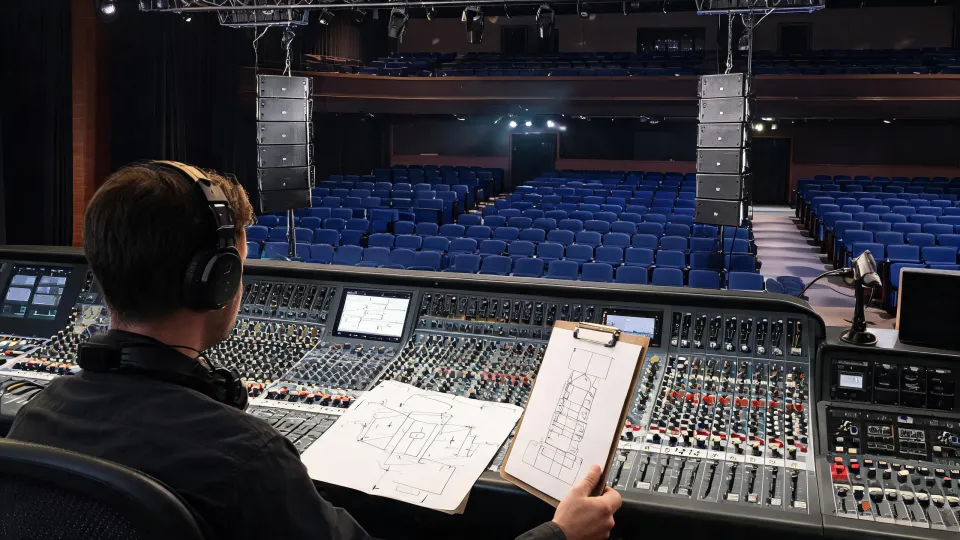
The short answer: Martin Audio speakers aren’t cheap, but I’ve learned that the lowest quote on a PA system almost never saves you money.
Take it from someone who processes about 60-80 orders a year for touring and installation gear. After 5 years of managing these relationships, I can tell you that brand reputation, system integration, and support infrastructure matter way more than the sticker price. When I took over purchasing in 2020, I made the mistake of going with a “good enough” line array that saved us $4,000 upfront. That decision cost us nearly triple that in repairs, rigging adapters, and a last-minute rental replacement when it failed during a festival.
So here’s my take: buying Martin Audio is about buying certainty—not just speakers. You’re paying for engineering that’s been proven in touring, a comprehensive ecosystem (MLA, WPS, Blackline, CDD-Live), and support that actually shows up when you need it. If you’re a rental company or installer who values reliability over a few percentage points off the quote, Martin Audio is a solid bet.
How I learned this lesson the hard way
Everyone told me to always check the fine print on warranties and system compatibility before approving a purchase. I only believed it after skipping that step once and eating an $800 mistake. In 2022, we needed a fast replacement for a blown subwoofer at a theater install. I found a “deal” on a nearstream audio mixer and a pair of dayton audio epique 7-inch mini subwoofer kits. The price was tempting—about 35% less than our usual supplier. But they couldn’t provide a proper invoice (handwritten receipt only). Finance rejected the expense. I ate the cost out of the department budget. Now I verify invoicing capability and system integration before placing any order.
That $200 savings turned into a $1,500 problem when we had to buy the correct gear anyway and pay for expedited shipping. (Note to self: document this process. I really should.)
What you’re actually paying for with Martin Audio
I’ve seen a lot of procurement folks compare prices on a Martin Audio MLA Mini rig versus a competitor’s “essentially similar” system and conclude the Martin is overpriced. Here’s what’s easy to miss in that comparison:
- System design and optimization: Martin Audio’s MLA technology isn’t just a fancy name. It’s a multi-cellular array design that gives you coverage control that’s actually predictable. That means fewer rigging points, less time tuning, and less risk of coverage gaps. I’ve seen installs where a cheaper system needed three extra boxes to achieve the same pattern. That’s not a savings.
- Reliability in touring: The WPS and Blackline Xp series are touring staples for a reason. They’ve been built to take abuse on the road. When you’re loading in and out every week, you need gear that doesn’t fail after 50 shows. I’ve had a Blackline Xp12 rig that’s been through three years of rental duty with no major issues. That’s not luck—that’s engineering.
- Ecosystem consistency: Martin Audio designs their amplifiers (like the DX4.0) to match their speakers. That means you don’t have to guess about power handling or crossover settings. It’s all pre-configured. For a system integrator, that’s huge—it eliminates the guesswork that can cause blown drivers or underwhelming performance.
When Martin Audio might not be the right call
Honestly, I don’t want to oversell it. There are definitely situations where Martin Audio isn’t the best option. If you’re a small church or a community center with a very limited budget and you only need basic speech reinforcement, a Martin Audio system is probably overkill. In those cases, you’re paying for touring-grade durability and advanced array technology that you’ll never use. A simpler system from a reputable brand might serve you better.
Similarly, if you’re a rental company that needs to match an existing inventory of a different brand, the integration costs could outweigh the benefits. Mixing brands is rarely a good idea for system coherence.
A practical note on pricing (as of early 2025)
This was accurate as of Q4 2024. The pro audio market changes fast—supply chain issues, new product launches, currency fluctuations—so verify current pricing before you budget. But as a rough guide, expect a Martin Audio MLA Mini system (8 boxes, 2 subs, 2 amps) to come in around the $50,000-$60,000 range (MSRP, street pricing may vary). That’s about 15-25% higher than some comparable systems from other brands. But factor in the time saved on rigging, tuning, and the lower failure rate, and the total cost of ownership over 3-5 years often favors Martin.
What about the other gear you mentioned?
I noticed you mentioned nearstream audio mixer, sonar audio mixer, and dayton audio epique 7-inch mini subwoofer kit. These are in a different category entirely. Nearstream and Sonar are mostly entry-level or prosumer mixers, not touring-grade consoles. The Dayton Audio kit is for DIY or small installs. If you’re building a professional PA system for rental or installation, mixing those with Martin Audio is like putting bicycle tires on a truck. They serve a purpose, but not in the same context.
The bottom line (with a caveat)
If you’re buying for a professional sound application where reliability, coverage, and system integration matter, Martin Audio is worth the premium. The hidden costs of a “deal”—the ad hoc repairs, the venue complaints, the failed shows—will eat whatever savings you thought you were getting. I’ve been burned by that thinking. I won’t make that mistake again.
But if your budget is truly tight and you can afford to take some risk on reliability, there are cheaper paths. Just know what you’re giving up. And for the love of all things holy, make sure the invoicing is proper before you click “buy.”