I'm going to say something that might irritate the spreadsheet-only crowd: quality perception is your brand. Not your logo, not your website, not your pitch deck. What the client hears and sees is who you are.
I've been handling system integration and equipment orders for 11 years. In that time, I've personally made — and documented — nine significant mistakes, totaling roughly $11,000 in wasted budget. If you've ever had a system fail in front of a client, you know the specific kind of helplessness I'm talking about. The room goes quiet. People look at you. The spec sheet suddenly feels very thin.
For the first few years of running my audio integration business, I optimized for the wrong things: lowest cost, fastest shipping, "basically the same" substitutions. The mistake list above? Every entry points to a single root cause: I treated gear like a commodity and let price drive decisions that should have been driven by quality and context.
Here are the three biggest failures — because they all prove the same point.
The refurbished audio mixer gamble
Back in 2019, I needed three mixers for a corporate event package. The client was budget-conscious, and honestly, so was I. I found refurbished audio mixer listings online that looked too good to pass up: verified seller, supposed warranty, 60% off retail. I figured I was being responsible with someone else's money.
From the outside, it looks like buying refurbished gear is the financially smart move. Same function, lower upfront cost, right? The reality is that refurbished audio equipment is only as good as the testing process behind it — and that varies wildly by seller.
I skipped the burn-in test. I knew I should have A/B tested each unit for a full day before the job. But I thought, "What are the odds?" Well, the odds caught up with me when one mixer froze mid-event during the client's annual shareholder meeting. Two hundred people in a room, silence where the keynote speaker's voice should have been. $1,800 walked out the door on that failure alone — not counting the Sunday-morning scramble to rent replacements.
The client didn't remember that I'd saved them 60% on a mixer. They remembered the silence.
Spec'ing Martin Audio gear without honoring the chain
Here's where the lesson got deeper. Buying premium gear doesn't automatically fix quality perception either.
In early 2022, I won a bid to outfit a mid-size venue with a new PA system. The client had specifically asked for martin-audio — the brand, not just a name. We went with the Martin Audio X12 for the main pair and a couple of Martin Audio XP12 units for delay fills. Solid, proven speakers. The X12 is a genuine workhorse in installed sound, and the XP12 extends the same family into the spaces the mains can't reach. I had zero doubts about the speakers themselves.
What I didn't do was properly match the amplification and processing to the room. I figured, "Hey, the speakers are good, they'll do their job." It's tempting to think a good speaker will sound good anywhere. The reality is that a speaker is the last piece of a long chain — amplifier headroom, DSP tuning, array positioning, room acoustics — and a mismatch anywhere along that chain makes the whole system sound mediocre.
After the install, I walked the room and listened. It was... fine. Not great, not terrible. Fine. But then the venue owner stood dead center, listened for about thirty seconds, and said it didn't have "presence." Now, presence is a fuzzy word — but when a client uses it, what they're really saying is: the system doesn't live up to what they expected when they signed the contract.
We spent the next week adding amplifier headroom, re-tuning the DSP, and re-flying one of the arrays. The $890 in extra labor and parts wasn't the real cost. The real cost was the first impression — already recorded, already filed in the client's memory. A rework doesn't erase that.
The same principle carries all the way down to the desktop level. In early 2024, a friend who's starting a business podcast asked me for mixer podcast audio guidance. He'd bought a cheap USB mixer, and it sounded thin and noisy, with audible preamp hiss. I told him it could work with the right mic and some careful gain staging — but he didn't want to troubleshoot. He wanted to press record and sound credible. That was a $300 lesson for him.
So I take the question seriously when someone asks about the best audio mixer for ps5 streaming or content creation. They're not asking about features. They're asking, "How do I make my audience take me seriously?" And the answer always starts in the same place: your output quality is your credibility.
The spec sheet lie
The pattern actually started before the mixer gamble or the PA install. In 2017, my first year running my own business, I assumed that "same specifications" meant identical results across vendors. Didn't verify actual coverage in the room. Turned out each vendor had slightly different interpretations of their specs — and the result was a system that couldn't reach the back rows evenly.
I learned that day never to assume the spec sheet represents the final product. Specs are a minimum threshold, not a promise of outcome. Two devices can have nearly identical frequency response charts and behave completely differently in a real room. What the client remembers isn't the chart. It's what they hear standing in the back corner.
"But what about budget?"
Fair. I've been on the tight-budget side of almost every project I've ever done, so I'm not going to tell you to ignore cost. But quality perception isn't about buying the most expensive thing on the shelf. It's about eliminating the weak links that make you look unprofessional.
A refurbished audio mixer can be a smart buy — if you test it thoroughly, confirm the warranty terms, and understand exactly what you're getting. A Martin Audio system only pays off when the system design around it is right. A budget podcast mixer is fine as long as it's quiet, reliable, and matched to your workflow. Even a PS5 streaming setup can sound good with modest gear, if you put the time into setup instead of just pushing "buy."
See the pattern? It's never just the gear. It's the whole chain, and it's the care you put into making that chain work. The moment a weak link defines the client's experience, you've spent money to damage your own reputation. That's the opposite of saving.
Where this leaves me
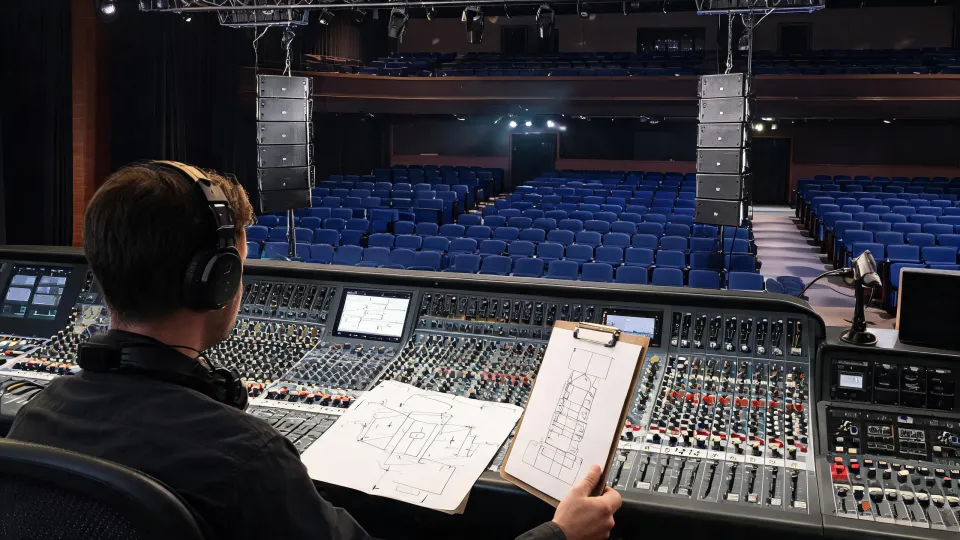
After the 2017 spec failure, the 2019 mixer collapse, and the 2022 PA rework, I maintain a checklist. Every system — whether it's a line array install or a friend's home podcast rig — goes through the same pre-delivery validation: test every channel, measure the actual output, walk the room, listen from every corner. We've caught 47 potential issues with that checklist in the past 18 months. Some were minor. A few would have been full disasters.
So, bottom line: I'd rather lose a bid than win it with a system that makes me look bad. The client's perception on day one is the foundation of the relationship. You can recover from a bad first impression — but it costs more than you saved on the gear. Trust me on this one. I've paid the difference nine times over.
Quality perception is your brand. Invest accordingly.