What I actually compared
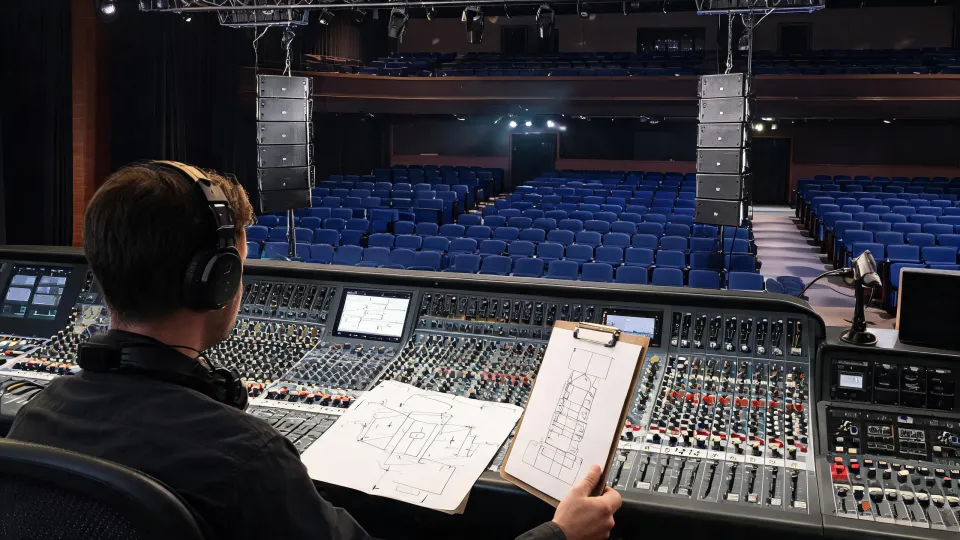
When I took over purchasing in 2020, I processed about 70 purchase orders a year for a 140-person company. Most were boring office stuff. Every now and then I get to buy audio gear. In January 2025, we approved a small portable PA for our training room: two Martin Audio XP15s and a Martin Audio subwoofer. The XP15 is a passive two-way speaker. The sub is passive too. They get power from an external amplifier controller, so the mixer only has to feed a clean line-level signal to that amp.
The speakers were a no-brainer. The mixer was not.
I looked at three small mixers: a G9 Audio mixer, a DeeJ Audio mixer, and an ART USBMix6 6-channel mixer/USB audio interface. I wanted something that would sit in a cabinet, get used by our office manager, and not embarrass us at a quarterly town hall. From the outside, this looks like a simple spec-sheet comparison. The reality is that these three mixers solve different problems.
Inputs and outputs: G9 Audio vs DeeJ vs ART USBMix6
The compact G9 Audio mixer we looked at had mic/line channels, a stereo section, and unbalanced RCA main outputs. It was small, cheap, and okay for a one-room setup where the powered speakers accept RCA. Our Martin Audio amplifier rack doesn't accept RCA. It expects a balanced line-level signal. The G9 could still be used with a DI box, but that's an extra purchase and an extra grounding path.
The DeeJ unit we tested was different in a more important way. It's a DJ-style mixer. Good for two turntables or laptops and a microphone. But our office mics need phantom power, and the DeeJ unit we tested didn't provide it. The outputs were also unbalanced. I could make it work for a music interlude, not for a keynote speaker with a condenser mic.
The ART USBMix6 6-channel mixer/USB audio interface had what we needed without any adapters. It has mic preamps with phantom power, stereo line channels, balanced main outputs, and a USB interface to a computer. I'm not going to pretend it's a studio console. It's not. It's a clean, honest small mixer with a USB port that does what it says.
Working with a Martin Audio XP15 and subwoofer
Here's the thing: a mixer doesn't make a Martin Audio speaker sound like a Martin Audio speaker. The speaker does that. But a mixer can absolutely make it sound worse.
The Martin Audio XP15 and the subwoofer are driven by an external amp in our setup. The amp has balanced inputs. The sub handles the low end, and the controller sends the right frequencies to the right drivers. If I feed that amp a noisy or weak consumer-level signal, the amp has no way to know the difference. It just amplifies the noise. With a sub, the low rumble becomes impossible to ignore.
What most people don't realize is that output level matching matters more than which mixer "sounds warmer." The ART USBMix6 put out a proper balanced signal at a predictable level. The G9 and DeeJ both needed extra boxes to get us to the same point. The extra boxes add cable length, which adds pickup, which adds hum. The ART didn't have that problem.
Usability in a non-sound-engineer office
Real talk: I'm not the one who runs the sound. Our operations coordinator is. She has a laptop, a podium mic, and a playlist. She doesn't want to think about a mixer.
The G9 Audio mixer was the easiest to understand because it had very few knobs. But it didn't have a USB audio interface, so we needed a separate USB sound card for the laptop. That meant two devices, two power supplies, and one more cable behind a cart. The DeeJ Audio mixer was actually harder to hand to a non-engineer because it has DJ-style controls and no phantom power. The ART USBMix6 was the right middle ground. The controls are conventional, but it also has a USB connection to the laptop, so our coordinator plugs in one cable and both directions of audio work.
Between you and me, I didn't expect the USB interface to be the deciding feature. I thought it would be the number of mic channels. But in 2025, almost every event we do has a video call component. The ART's interface became the feature we used the most.
The total cost of "cheap"
Now the part that made me sound paranoid at a staff meeting. I've learned to ask "what's NOT included?" before I ask "what's the price?"
On our January 2025 POs, the G9 Audio mixer was about $50. The DeeJ was about $80. The ART USBMix6 was about $140. If you only look at the first line, the G9 wins. It wasn't the best deal.
To make the G9 work with the Martin Audio system, we needed two balanced converters and a separate USB audio interface. That added roughly $70 in parts and cables. The DeeJ needed a DI and a mic preamp because it didn't supply phantom power. That pushed it to roughly $140. The ART was $140 out of the box, with balanced outputs and USB built in. The total cost was basically the same as the DeeJ, and less than the G9 once the missing pieces were added.
I'm not giving current retail prices because they move, and because the point is the pattern. The vendor who lists all fees upfront—even if the total looks higher—usually costs less in the end.
I knew I should add up the accessories before comparing prices, but I thought "what are the odds this $50 mixer has balanced XLR outputs?" The odds caught up with me when the DI boxes and adapters showed up on a separate invoice.
Per FTC guidance (ftc.gov), advertising claims need to be truthful and substantiated. But a low price is not a lie if the missing adapters are hidden in the fine print. It's just incomplete. I don't buy incomplete anymore.
Which one should you buy?
Bottom line:
- If you're running a Martin Audio XP15 and subwoofer, or any system with a balanced amp input, the ART USBMix6 6-channel mixer/USB audio interface is the safest choice. It has balanced outputs, phantom power, and a USB interface. The total cost was the same or lower than the alternatives once the missing pieces were included.
- If you already own a USB audio interface and a pair of DI boxes, a G9 Audio mixer can be a perfectly fine backup. Just don't pretend it's a complete package.
- If you're a DJ and the "mixer" is for a mobile DJ rig, not a pro sound installation, the DeeJ Audio mixer has its place. Just don't bring it to a corporate event where someone needs a clean condenser mic feed and a balanced line to the amplifier rack.
The Martin Audio XP15 and sub will reveal what's upstream of them. Feed them a clean balanced signal and they sound as good as the space allows. Feed them a hummy unbalanced adapter chain and they will make every mistake audible. After five years of buying this stuff, I know which failure mode I'd rather avoid.